HOME EXERCISE FOR SCOLIOSIS CORRECTION
Igor Gershengorin
By Yana Blinova, MS, Inventor of Pelvic Clock® Exercise Device, Former Olympic Coach
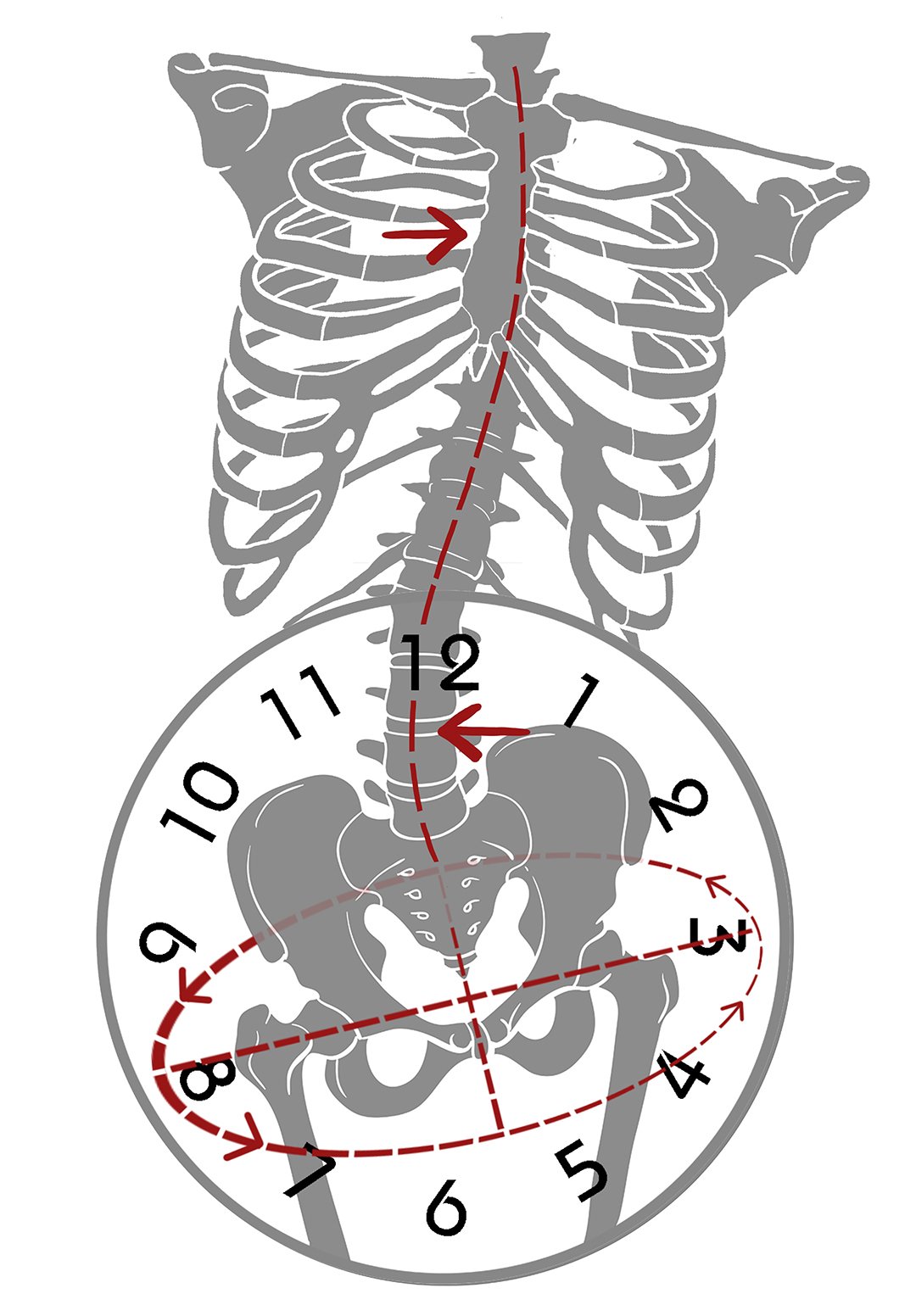
Corrective exercises became a part of my life when I was diagnosed with galloping scoliosis at age 12.
Over the past four decades, I've learned that scoliosis correction doesn’t have an “end-of-therapy” date. If you stop exercising, most of the symptoms will promptly return.
In addition, there is no alternative to regular corrective exercises.
This post will help those who have already accepted this tough reality to optimize their scoliosis exercise regimen.
As each case of scoliosis is different, there is no standard exercise protocol that works for everyone. Instead, a corrective exercise specialist must design a proper exercise routine to address your specific needs.
Before you can start exercising on your own, you’ll need to improve your proprioception: awareness of the position of your body. This is important because what feels symmetrical to you may, in reality, be misalignment.
For self-corrections, use a mirror, wall, floor, yoga mat, and exercise barre.
Why Use the Pelvic Clock® Exercise Device?
The Pelvic Clock® exercise device can help you with the alignment of lumbar spine, hips, and sacroiliac joints.
The flat surface of the device has a recess for the sacrum — the large triangular bone at the bottom of the spine. The sacrum is situated at the imaginary midline of the body.
Once you have positioned your sacrum on the device, you’ll feel the difference between the right and left halves of your pelvis. Then, you can self-correct any of the four pelvic misalignments:
If you have scoliosis, you most likely have more than one pelvic obliquity.
Which Pelvic Clock® exercises can help correct scoliosis?
In this free PDF, you’ll find stretches and core stability exercises suitable for the most common types of scoliosis (lumbar, thoracic, C-shaped, and S-shaped). You can safely try all of them or choose the ones best suited to your corrective exercise routine.

Begin with an exercise that helps reduce the sideways curve of the spine, correct a lateral pelvic tilt, balance uneven hips, and address functional differences in leg length.
Side Stretch
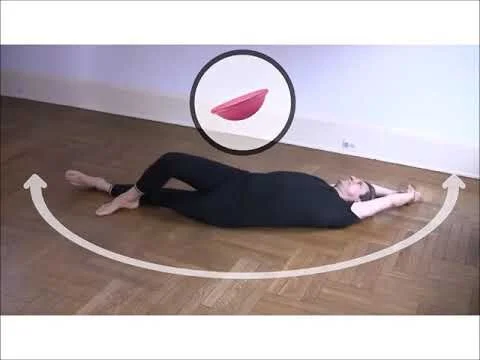
A lateral curvature of the spine can cause vertebral rotation and result in a twisted pelvis, with one hip turned outward and the other inward.
Pelvic Rotation Exercise
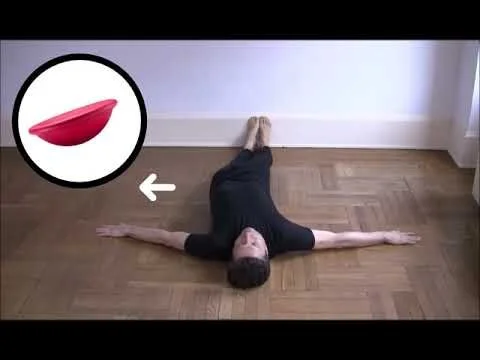
This simple exercise is surprisingly effective if you pay attention to small details:
Lie on the floor.
Position your sacrum on the Pelvic Clock®.
Stretch out your legs and place your feet flat on the wall in front of you, with heels on the floor.
Keep your shoulders firmly on the floor.
Drop your right hip and rotate your pelvis to the right.
Hold the stretch for 5–15 seconds.
Drop your left hip and rotate your pelvis to the left.
Hold the stretch for 5–15 seconds.
Compare the two sides and identify the tighter side.
Return to the tighter side and hold the position for 30 seconds to allow a deeper stretch.
Repeat 10 times on the tighter side only.
You can also use the Pelvic Clock® for thoracic or “S-shaped” scoliosis.
Thoracic Rotation Exercise
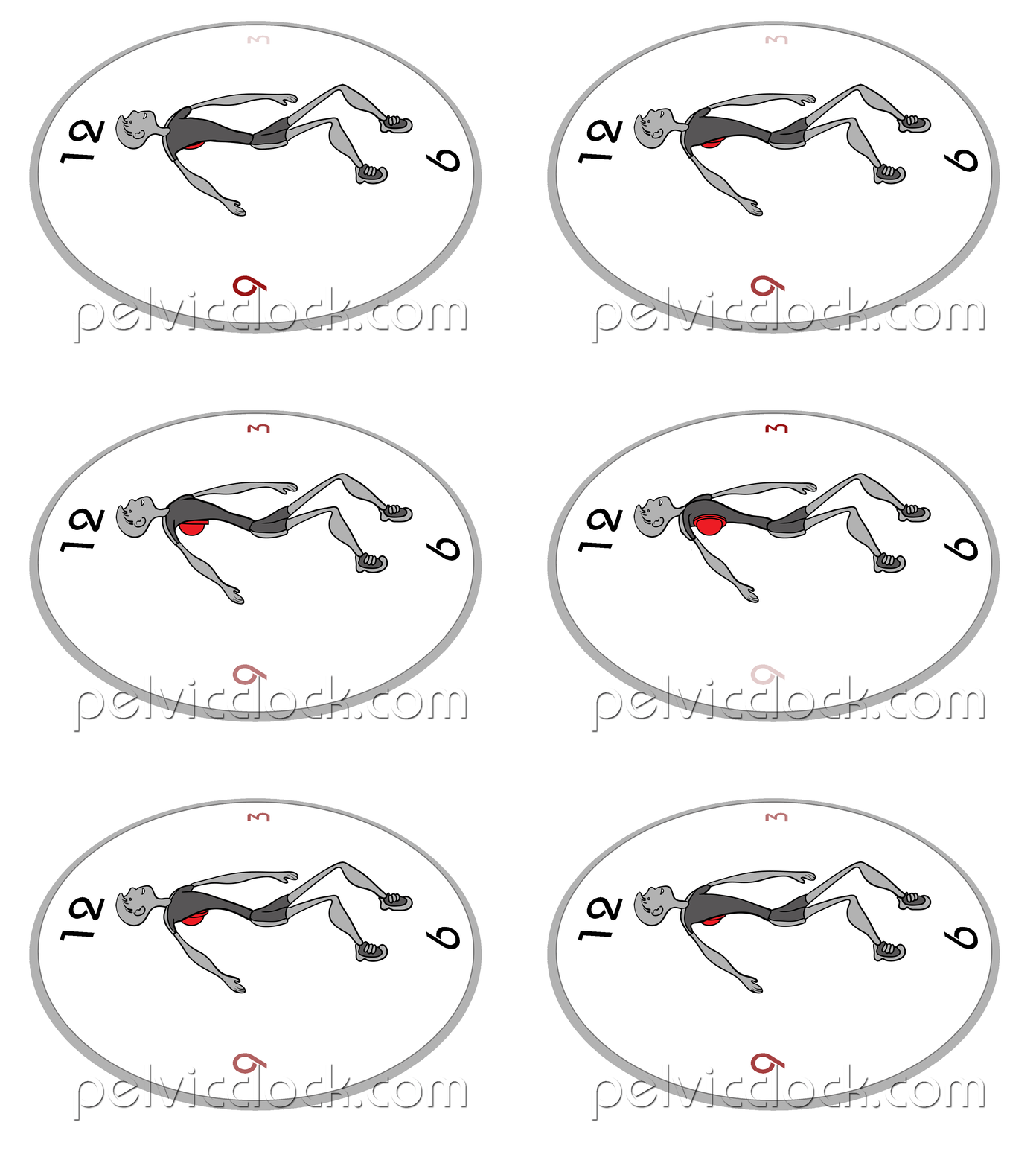
This gentle exercise can help realign the thoracic spine and improve thoracic mobility.
Lie on the floor.
Place the flat surface of the device between your shoulder blades, with the rounded side on the floor.
Slowly rotate your rib cage about 1 inch to the left.
Keep the rest of your body still.
Hold for 5–15 seconds.
Slowly rotate your rib cage about 1 inch to the right.
Keep the rest of your body still.
Hold for 5–15 seconds.
Compare the two sides and identify the tighter side.
Return to the tighter side and hold the rotation for 30 seconds to allow a deeper stretch.
Repeat 10 times on the tighter side only.
What Other Exercises Are Good for Scoliosis?
Swimming and other symmetrical exercises like walking, cycling, cross country skiing, and rowing are the best cardio solutions for scoliosis.
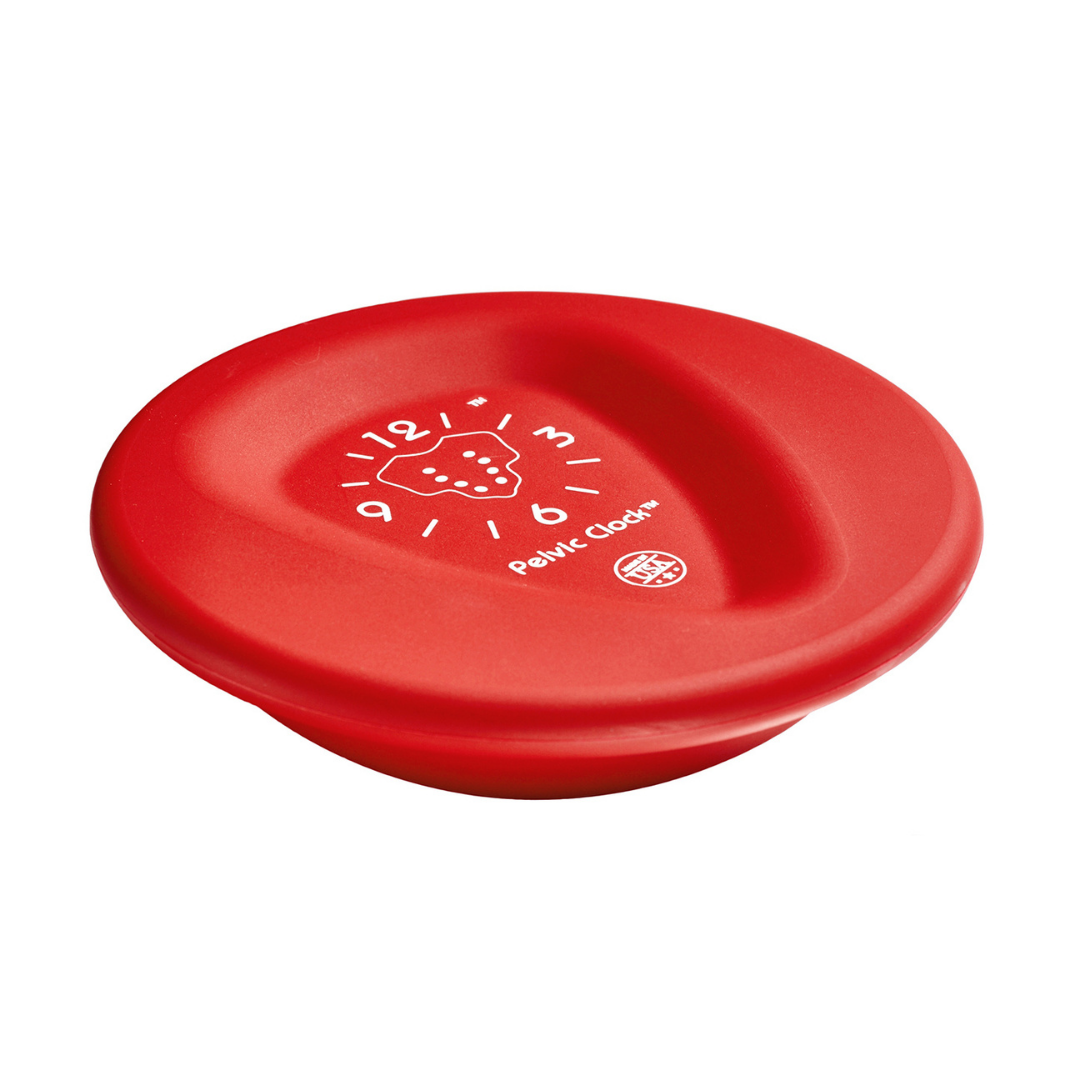
Manufactured in the USA, the Pelvic Clock® is a portable exercise tool for the hips and lower back. It is recommended for stretching and core stability workouts designed to relieve chronic pain associated with sacroiliac dysfunction, scoliosis, piriformis syndrome, lumbar spinal stenosis, and other related conditions.
Size: 6.5" x 2". Weight: 0.75 lbs.